Andrew Pelling
Breaking Bio
I love, and also fear, the exquisite mess of biology. If I’ve learned anything from running my own academic lab, it's that biology has a way of contaminating absolutely everything. Few people know this, but I have always kept an alcohol spray in my office to clean the door handles every time I (or anyone else) pass through the door. I may be the world’s most unlikely germaphobe. It takes all my willpower to walk into the lab, but discovery is too beguiling to resist. So, I take a deep breath, open the door, and wash my hands.
In biological labs, scientists traditionally perform countless tasks to maintain an environment characterized by a soap and stainless steel aesthetic. From the spray of cold alcohol to the hot, moist air vented from a freshly run autoclave, scientists perform the theater of sterility daily. These acts of obsession come from a need to maintain the purity of their cells, to keep their experiments free from the bacteria and fungus that pervade every surface, including the scientists’ own bodies.
But for me, that show gets boring. I find myself dreaming up cheeky experiments that ruin this purity. In my experience, biology always has another surprise, no matter how much we think we understand it. So, my instinct is to break biology out of its clean container, and get it “dirty.” I’m not sure this is the most productive way to do science, but these activities have led to some of the most interesting discoveries of my career.



Scientific reductionism, the almost universal strategy to remove complexity from systems, to break them down into smaller, simpler parts so we can understand how they function, has simultaneously served and limited discovery. Reductionism creates a false sense of understanding, false sense of control.
In conventional cell and tissue culture labs, the use of antibiotics (Greek for “against-life”) ensures that cultures contain only a single cell type. Plastic culture vessels create well-defined geometries and surface chemistries. Formulations of sugars, salts, amino acids, vitamins, and all manner of obscure molecules bathe monocultures. But these ultimately resemble nothing in the natural world. In effect, we create semi-living, non-self-sustaining goo with defining characteristics that serve science rather than life. In this condition, the glorious purity of this mass of active matter possesses the same monotony of the cold and lifeless stainless-steel walls of the incubator—a sterile incubator now contaminated with the organisms we deem interesting for study.
During training to become a scientist, one grows familiar with conventions and scientific protocols, and it becomes easy to believe that they replicate wild biology, yet lab conditions have very little to do with real life and all its unexpected, whimsical behaviors. The problem is that the more control we exert on living things, the more artificial they become. Lab data and observations tell us very little about biology in actual bodies and environments.
When I was a graduate student, a senior scientist raised this exact concern while I was presenting onstage at a large international biomedical conference. He asked, “How can your experiments conducted in petri dishes possibly have anything to do with what happens in an actual human body?” I have no idea how I responded, but I definitely remember the sweat stains.
It wasn’t until years later that I began to wonder why seasoned scientists viewed in vitro results with skepticism. Simultaneously, I became fascinated that cells—evolved for bodies but imprisoned in the absurd landscapes of plastic culture dishes—could survive at all, moving, growing, metabolizing, and differentiating in terra incognita.
This small shift in perspective became the foundation for my biological research. Once one decides to test the limits of the artificial conditions under which a cell can thrive, scientific opportunities arise. Questioning the dogma of cellular purity, however, has become a slippery slope.
Scientific protocol specifies that growing animal tissues requires specialized plastic flasks and dishes. That’s at least what we teach our students. For me, questioning that one small convention created an existential crisis that would shake decades of training. We assume that science’s protocols and procedures are built on a bedrock of solid evidence. What if some portion of that foundation is purely convention? What if we perform our experiments in a particular way because that’s just the way it’s always been done?
Over a decade ago, my team and I developed protocols to cultivate mammalian cells on LEGO blocks. The immediate goal was an irreverent poke at scientific convention. While many people aim to grow their cells on scientifically approved dishware, we showed that we could grow our cells on an equally absurd form of plastic—children’s toys. I found myself cultivating living sheets of mammalian cells on LEGO blocks, LEGO furniture, and yes, LEGO figurines.
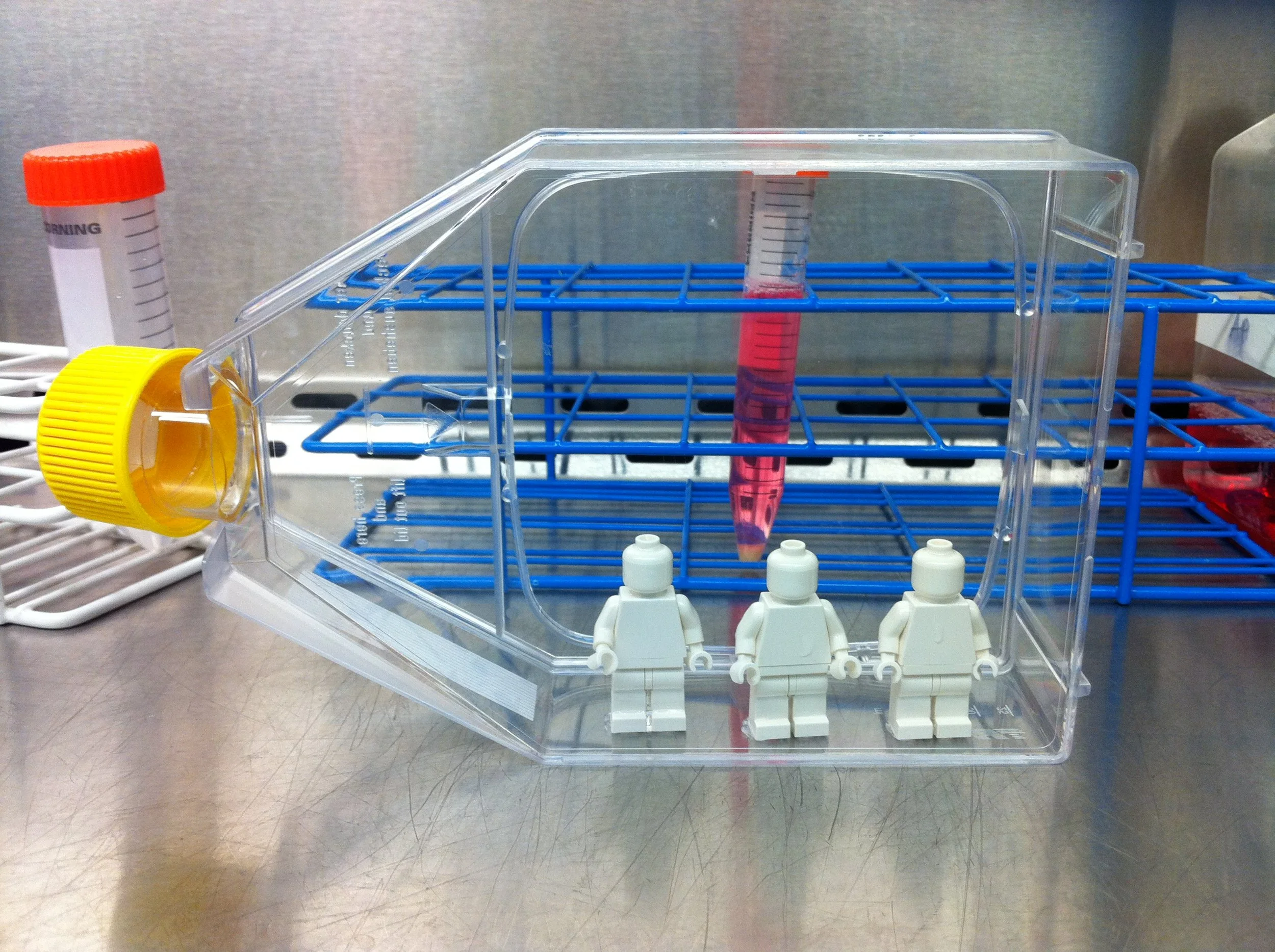
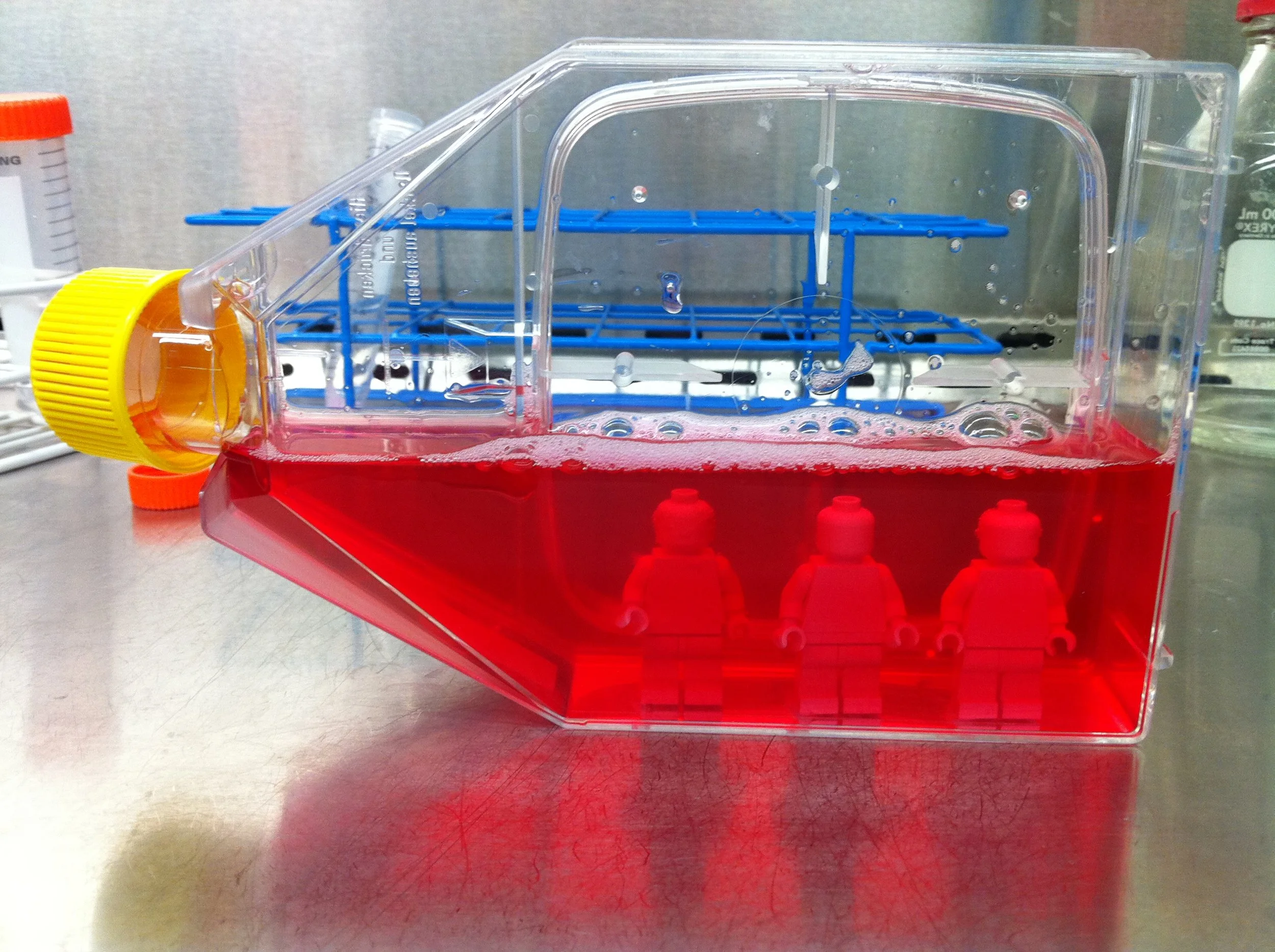
Inspired by the Semi-living Worry Dolls (2001) cultivated by artists Oron Catts, Ionat Zurr, and Guy Ben-Ary, I grew my own worry doll from a LEGO figurine, and I whispered my concerns to it about the unfamiliar path my research had taken. In retrospect, that initial detour became the scientific equivalent to an amuse-bouche.
Years later, I found myself rewatching Little Shop of Horrors. I was fascinated with Audrey II, the arrogant, bloodthirsty, singing plant monster. On the one hand, this organism was green, leafy, and lived in a pot. On the other, it had the teeth, tongue, and appetite of an animal. I began to wonder, could we create an Audrey II in the lab—the ultimate cross-contamination of animal and plant cells?
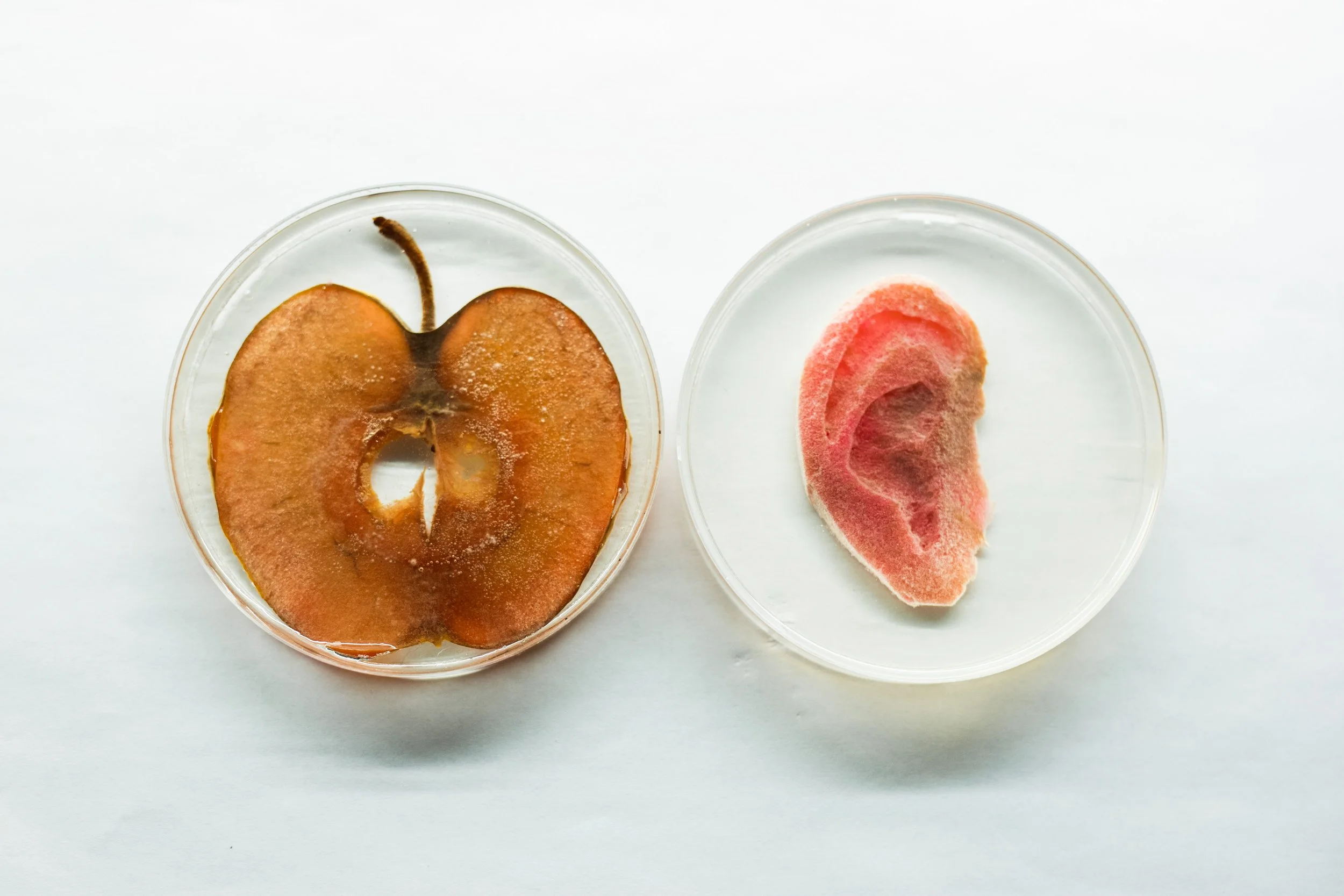
To date, my best known research was the demonstration that mammalian cells can be grown in plant tissues. In a 2014 study, my lab showed how plant tissues could be purified and sterilized to serve as a medium for growing human and animal cells. The work eventually led to the carving of apple tissues into shapes resembling human ears, the first proof of concept that plant tissue might one day become a viable biomedical material for reconstructive surgeries. Later, we demonstrated how plant tissues could be safely implanted in animals to become an inert and stable scaffold for healthy cells and blood vessels.
We have even harnessed the micro-structures of plant tissues to direct and support nerve regeneration in spinal cord injuries, leading to the partial recovery of motor function in paralyzed animals. Now a “technology,” these plant-based biomaterials have also been designated a “Breakthrough Device” by the FDA, dramatically accelerating their application in the clinic.
What began as a deliberate attempt to cross-contaminate plant and animal, driven by disregard for lab purity standards, is now becoming, dare I say, standard practice.
Perhaps these experiments provide a false impression of modern biological control. If I’ve learned anything in the 25 years I have been cultivating cells, it’s that when out in the wild biology has an unrelenting way of displaying its domination. Real biology is, and always will be, out of our control.



Andrew Pelling
Andrew Pelling is a Scientist and Researcher. He is a former full professor of Physics and Biology at the University of Ottawa where he ran a research lab in Augmented Biology. Pelling has cofounded multiple companies, including Spiderwort Inc where he serves as CSO and is focused on the clinical translation of plant-based biomaterials as treatments for spinal cord repair.
*Marginalia illustrations inspired by British mathematician John Horton Conway’s Game of Life.